To Do List: April

Take some time in April to visit art South and North of San Francisco:

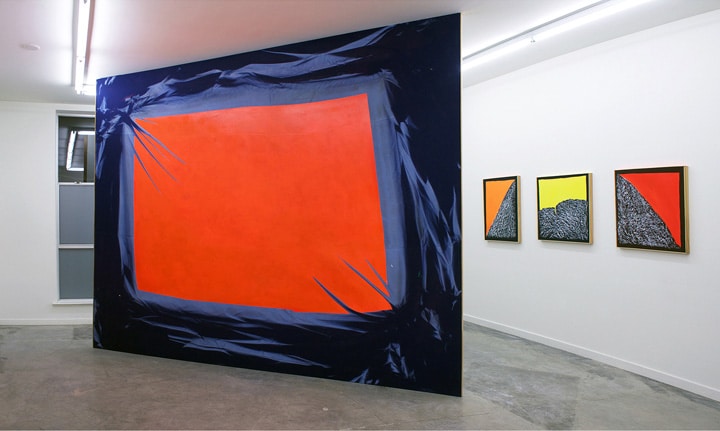
Through May 12, 2012:  Younhee Paik:  Ascending River, San Jose ICA, 560 South First Street, San Jose:    Take a trip to San Jose to see the California premier of Younhee Paik’s large-scale, immersive installation Ascending River.  “Paik’s dynamic, unframed paintings are hung from the ceiling like sails and laid out under a plexiglass-covered floor, enveloping the viewer in an immersive other-worldly environment.  The works are complex in color and texture and filled with motifs of light that seem to radiate from the canvases.  Celestial and water imagery abound, as do recurring imagery of ships and architectural drawings of cathedral floor plans. Through the use of these images, Paik makes a connection between the world of experience and the world of the unknown while challenging our conventional notions of space and time.  The installation also includes a place for the viewer to lie down, relax, and listen to music with headphones. ” – SJICA

Younhee Paik, "Ascending River". Image courtesy of Staller Center for the Arts at Stony Brook University, Stony Brook, NY

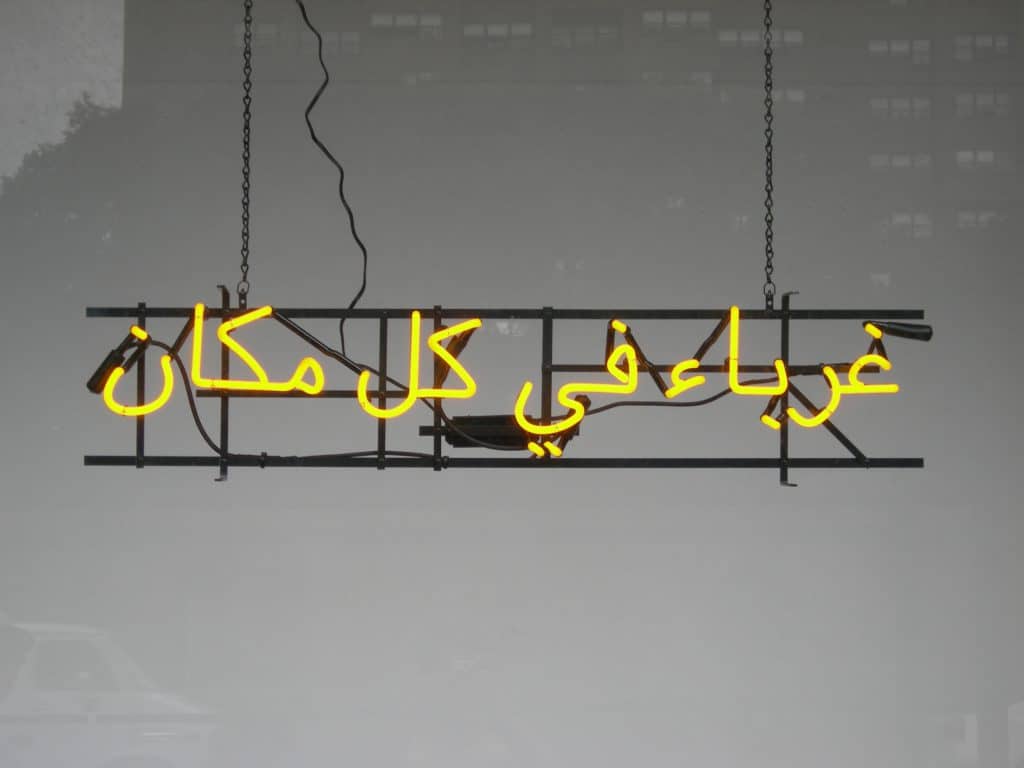
Also don’t miss the window installation Everything is in Motion by San Jose artist Emanuela Harris-Sintamarian:

Emanuela Harris-Sintamarian, "Everything is in Motion". Image courtesy SJICA


March 30 – September 23, 2012  Mexicanisimo Through Artists’ Eyes at the San Jose Museum of Art, 110 South Market Street, San Jose.  This exhibition features works by a new generation of Mexican and Mexican-American artists who are fascinated by traditional techniques, yet they create cutting-edge conceptual artwork.  Mexico City-based artist Betsabee Romero carves tires with pre-Columbian icons and symbols in order to satirize Mexico’s machismo car culture.  Margarita Cabrera’s series Arbol de la Vida  combines issues of contemporary art practices, indigenous Mexican folk art and craft traditions and US-Mexico relations.  The sculptures depict actual tools used on small farms in the agricultural communites throughout the United States.  Dating back to the Olmec times, the traditional Mexican craft theme of Tree of Life embodies the tools with an assortment of ceramic birds, butterflies, flowers and leaves.

Betsabee Romero, "Espiral Sin Fin", 5 carved tires. Image courtesy SJMA

Margarita Cabrera, "Cerrucho (Saw)" and "Pala (shovel)", ceramic, slip paint, and hardware. Images courtesy of Walter Maciel Gallery


April 15th, 27th, 29th and on-going, Oliver Ranch Tours, Geyserville.  Located in the heart of Sonoma County, 70 miles north of San Francisco, the Oliver Ranch is home to 18 remarkable site-specific installations.  The picturesque 100-acre property was originally bought by Steve and Nancy Oliver in 1981 to graze a few extra sheep from, as Steve says, “My daughter’s 4-H project gone bad.” The ranch’s evolution from exiled sheep quarters to world-renowned sculpture ranch was gradual and organic, a natural convergence of the Olivers’ longstanding passion for art and deep connection to the land.  The Oliver Ranch Foundation now make tours available to non-profit organizations who can then offer the tour as an auction item or on a cost-per-ticket basis.  You must purchase a ticket (from $75-$150) from one of the scheduled non-profit organizations listed on their tours page.  The best part of the tour is that Steve Oliver leads it himself, describing the artist’s process as they respond to the land and create their site-specific piece.

Richard Serra, "Snake Eyes and Boxcars" (Six pairs of forged hyper-dense corten steel blocks)

Ann Hamilton's cast concrete tower performance space. Walking down Bruce Nauman's cast concrete staircase.


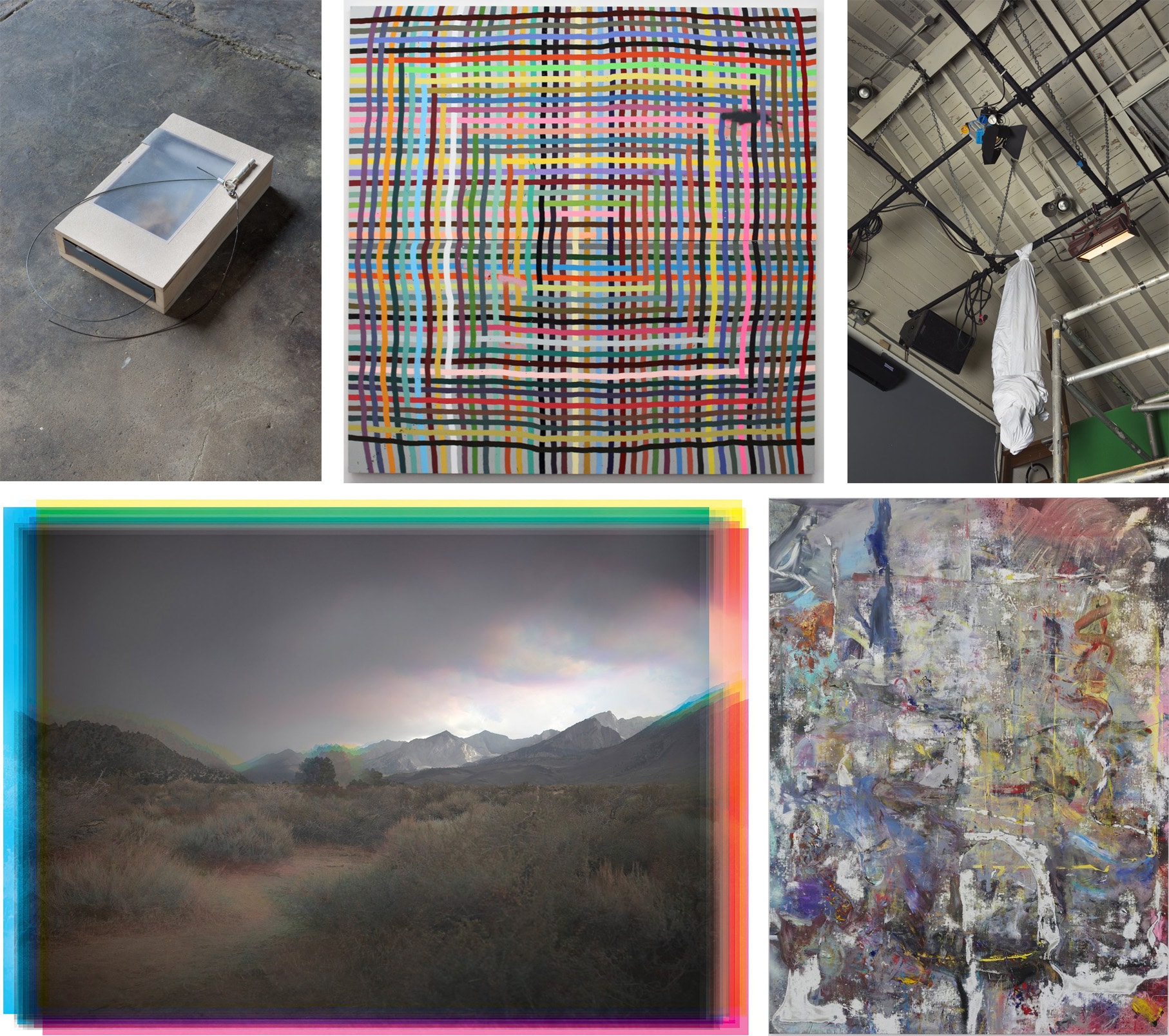
Ongoing through June 10th, Color Theory:  The Use of Color in Contemporary Art, Sonoma Valley Museum of Art, 551 Broadway, Sonoma.  This exhibit, guest curated by Katrina Traywick of Traywick Contemporary, celebrates and explores the meaning, usage and significance of color within the context of contemporary art. Employing non-traditional materials and processes, nine artists engage the foundations of color theory in ways that are entirely contemporary. The exhibition ultimately illustrates that color is not only to be seen, but also experienced.

Charles LaBelle, "Driftworks - Miami (colors)", compound photograph. Image courtesy of Traywick Contemporary


Lucrecia Troncoso, "Not MY Tongue Tied", plastic latex, cardboard, thumbtacks. Chris Duncan, "Cornered", string, wood and mirror. Images courtesy Traywick Contemporary.


Formality and material….

Formality and material….

I’m drawn to art with a formal presence.  But when the works are made with non-traditional materials, I’m even more captivated….its something about ingenuity – the artist’s ability to see the possibility in the material and then make it work as their own, unique language.

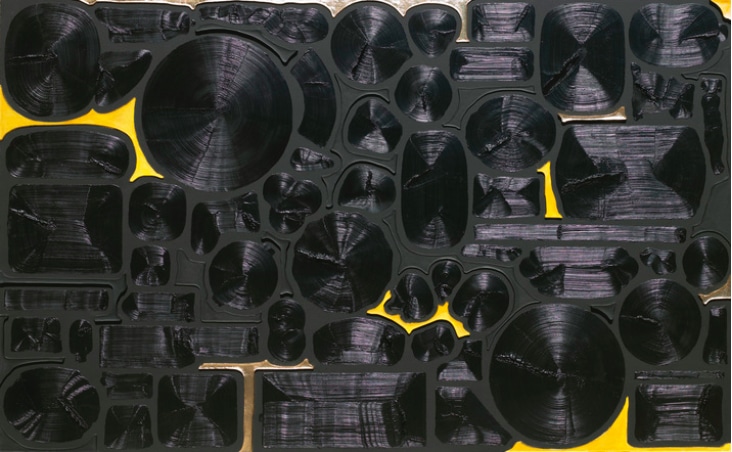
Take this Chris Duncan for example…beautifully made, reminiscent of a night time seascape. Chris started making this work using strapping tape over magazine or text book pages when an injury kept him from other more labor-intensive dot-patterned works.  

Artist influences come from suprising and not so surprising places…a coincidence that Chris has worked as an art handler by day?

Duncan_Obstructed_Image_8

                                                                                                                                            source:  Baer Ridgeway Gallery


And castaneda/reiman…who’s work has often been taken for traditional landscape painting.  Upon closer inspection, there is something about the material and its application that is different. 

Appearing like multilayered canvas paintings of beautiful scenes rich with glazes and grounded in painting tradition, they are actually plywood and sheetrock layered in drywall mud. The mud is pigmented with commercial tints and applied with a trowel more in the tradition of house building than conventional landscape painting.  Influence?  Perhaps it has something to do with the fact that the team worked in construction – and that they collect California landscapes.  

Screen shot 2011-06-14 at 1.44.30 PM

                                                                                                                             source:  Baer Ridgeway Gallery


Bluemountain

source:  DCKT Contemporary


The work of  Leonardo Drew…scrap material such as found wood is arranged in formal compositions.   Where some might initially view the materials as chaotic scraps, Drew envisions and creates order through patterned and rhythmic placement.    This is a thoughtful video about Leonardo and where his influences and materials come from – his name alone is a hint. 

LD #143 10514

                                                                                                                                           source:  Sikkema Jenkins


LeoDrew01                                                                                                                                      source:  Weatherspoon Art Museum


Jill Sylvia…painstakingly assembled abstractions reminiscent of Twombly-esque mark-making and minimalist painting.  Sylvia extracts (with Xacto knife) the boxes from found (her father’s) ledger sheets and re-assembles them into formal constructions.  Her laborious effort examines the value of effort. 

Reconstruction7                                                                                                                            source:  Eleanor Harwood Gallery

- JBK